“Daney Daney Pey likha hain khaney waley kaa naam” – which colloquially means each grain has the name of the person who will eat it (it is the fortune of the person to have a certain meal or not). Well, the same with more spice in Hindi movies: “goli goli pey likha hain marney waley kaa naam,” which means on each bullet is written the name of the person who will die.
Before I take you along on this blog, I will try my best to keep the suspense of why the introduction to a culinary adventure got its inspiration from a Hindi muhavra and Bollywood film.
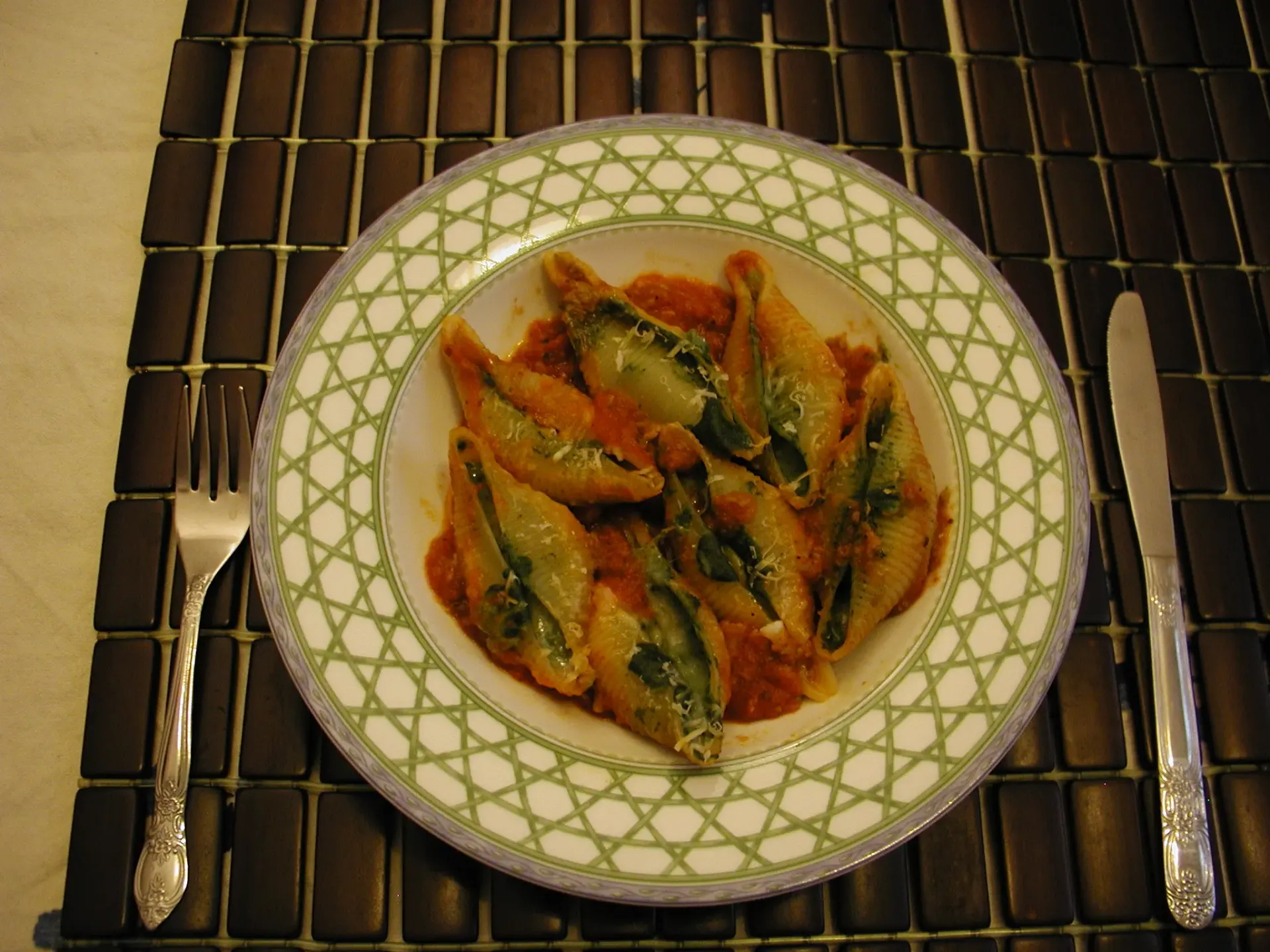
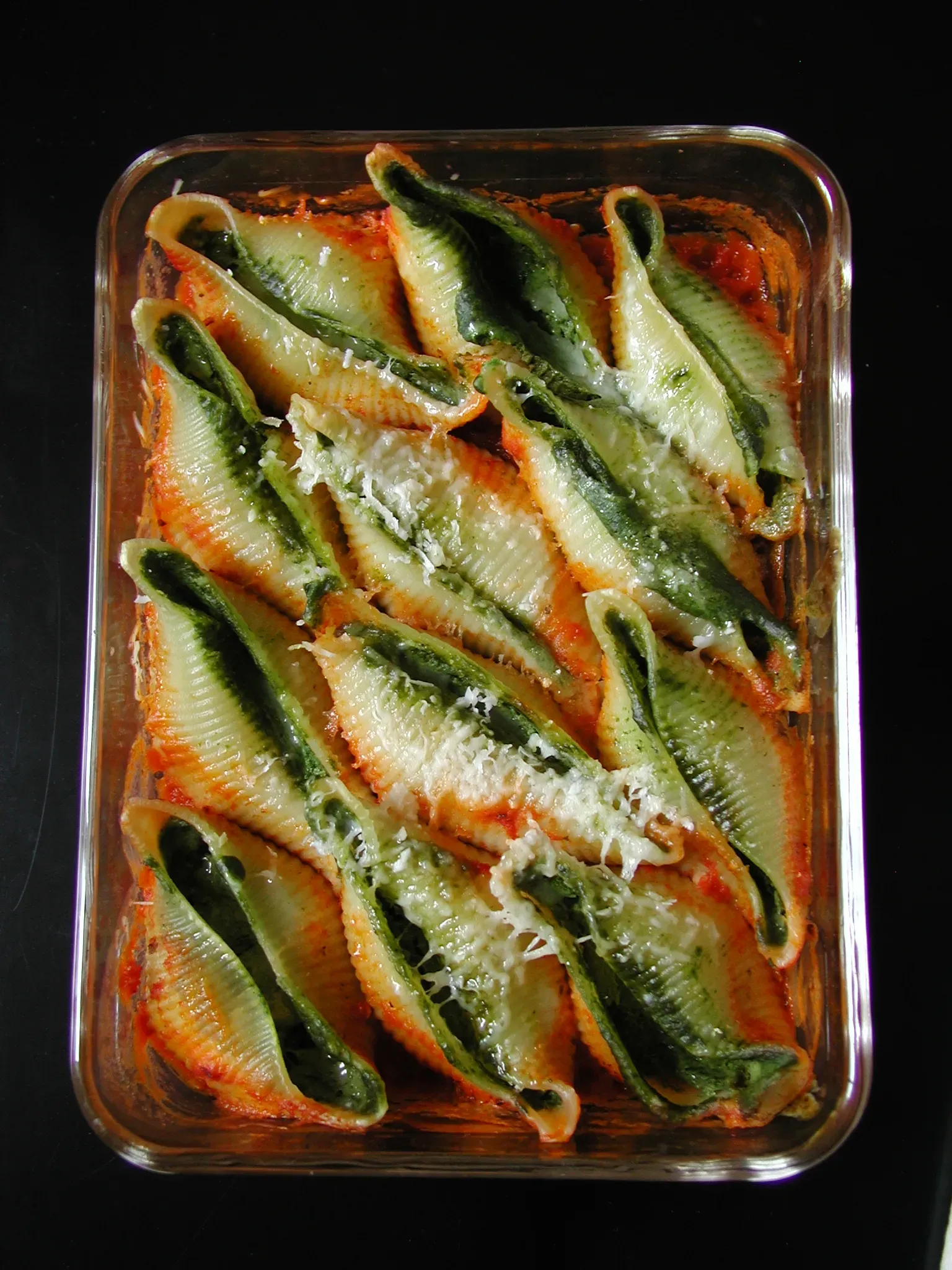
Today, we tried to prepare a pasta dish a bit different from our normal standard. Initially, Pamela did not show much interest, maybe due to the somewhat lengthy procedure… she must have thought to leave it to me. But in the end, she seemed to have willy-nilly enrolled in Italian cuisine and did all the steps to prepare this awesome dish - a recipe to die for without killing for.
Spinach and Ricotta Conchiglie - Conchiglie, which means large pasta conch (a kind of shell) designed to hold delicious stuffing, in our case, a mixture of chopped spinach and ricotta cheese. With their concave shapes, they are one of the most useful pasta forms as they trap any sauce. So far, we have prepared long pasta like spaghetti, spiral-shaped fusilli, butterfly-shaped farfalle, and stuffed ravioli, either with fresh crème sauce, tomato sauce, or pesto sauce. We have even tried flat pasta lasagna, designed to be baked between layers of sauce.
Pasta is one of the staple foods of every authentic Italian meal and is a versatile food. It is considered to be low-fat and rich in complex carbohydrates. However, it is important to choose the sauce carefully, as overloading it with cheese or cream sauce will turn pasta into a high-fat food. Of course, the number one rule of great Italian cuisine is fresh is best.
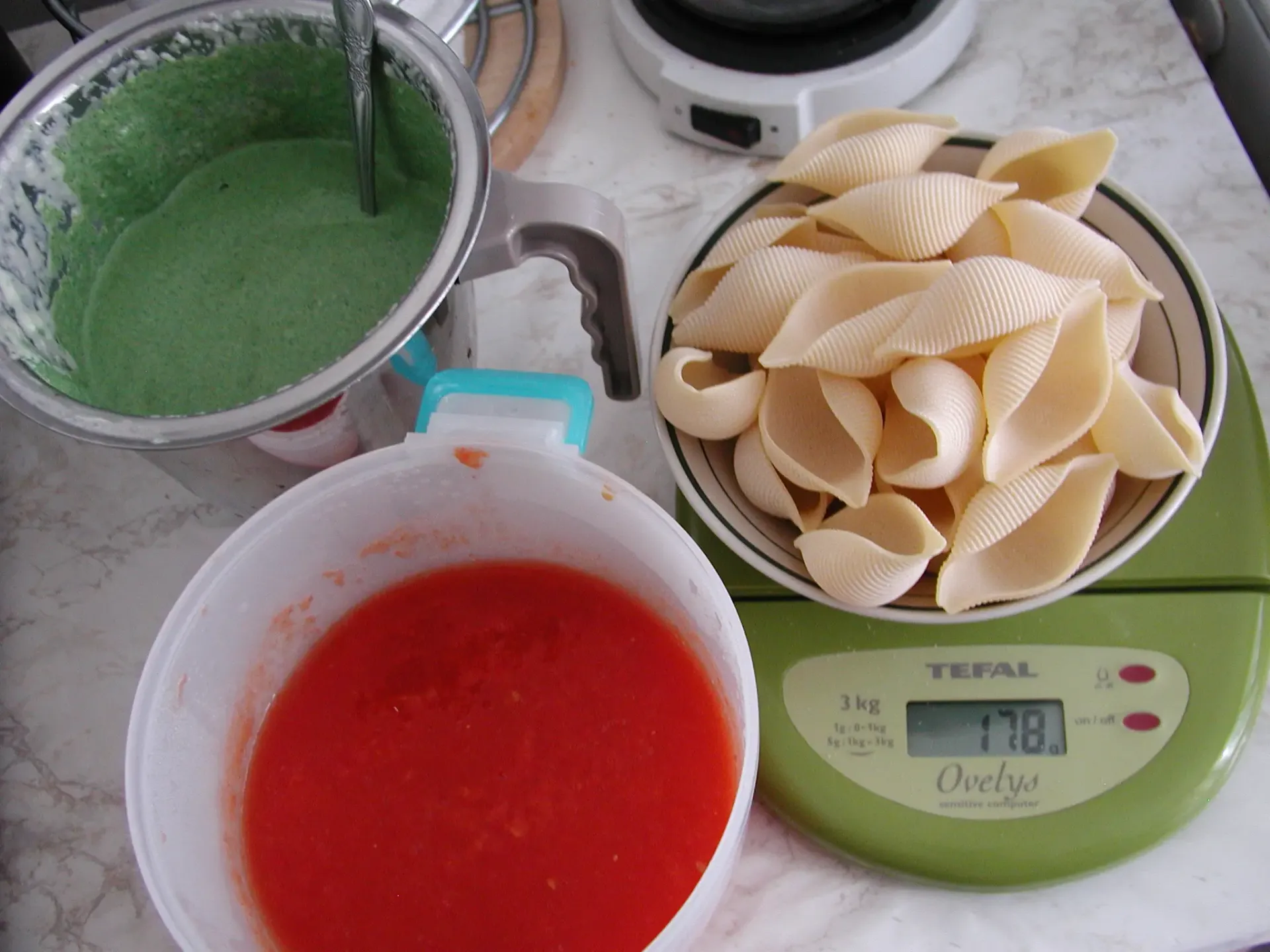
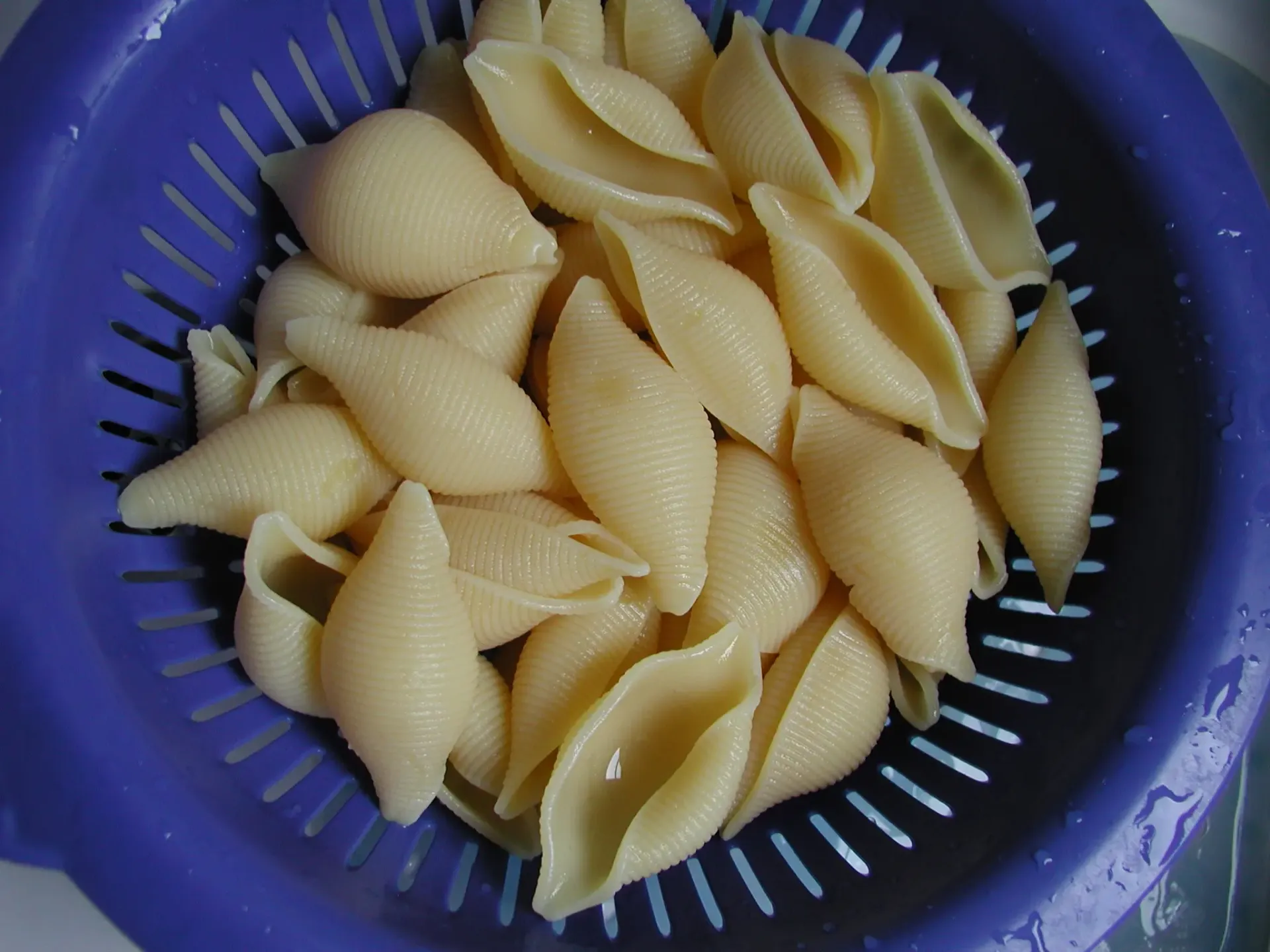
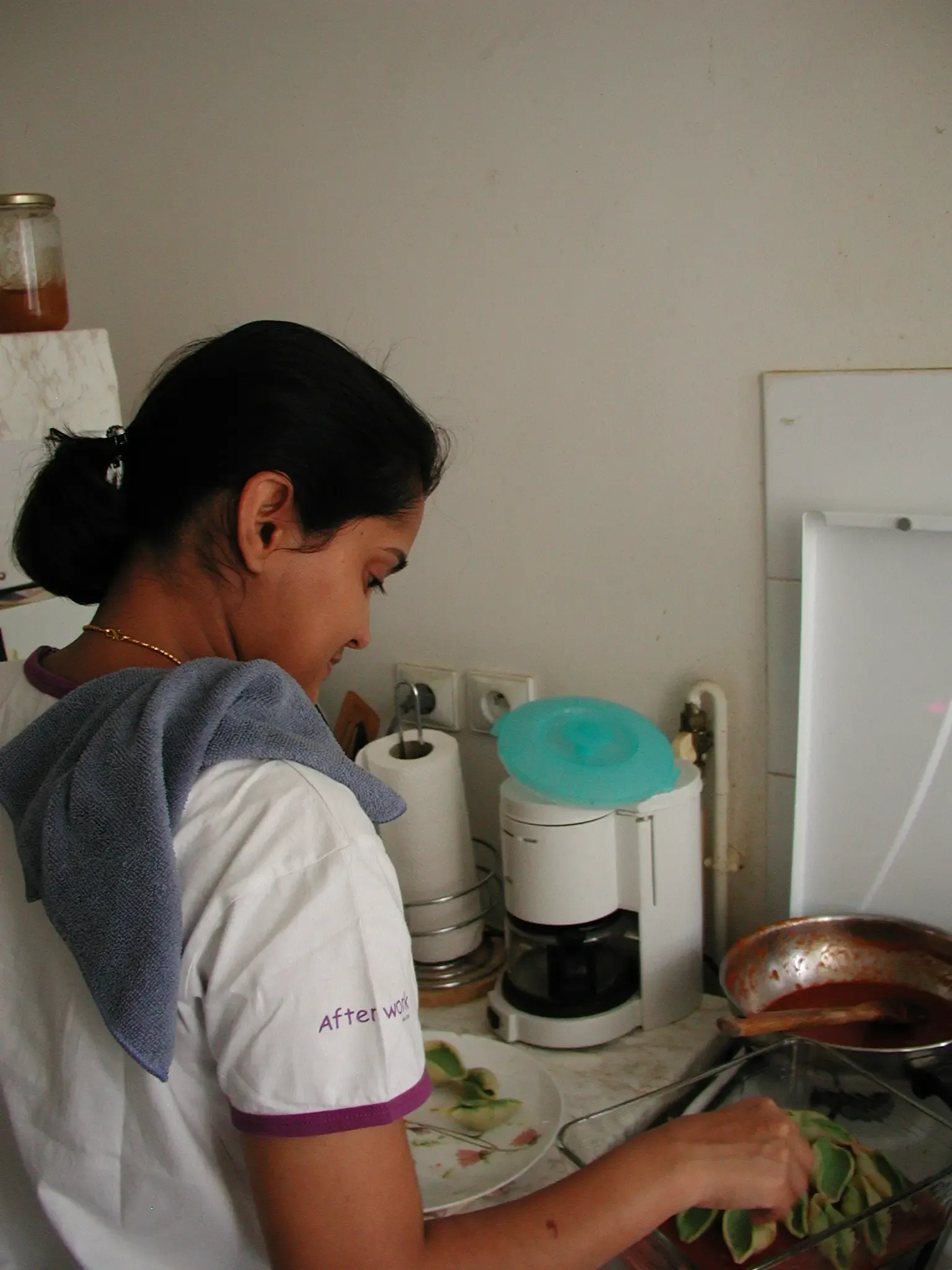
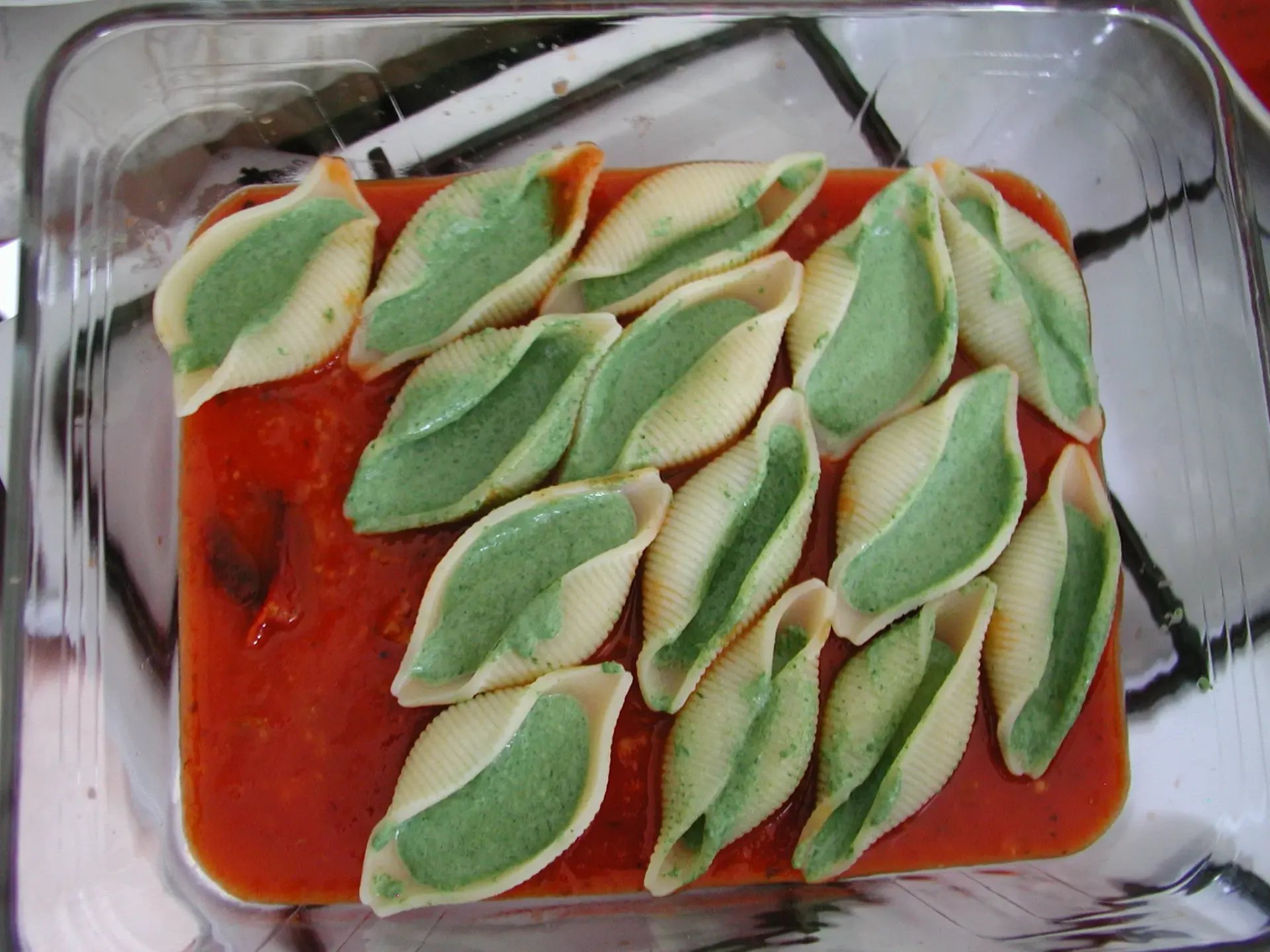
Actually, the colorful picture of the recipe in the book on Vegetarian by Nicolas Graimes drew my attention, and I thought, why not try it? Without revealing the secret of this recipe, here are the pictures of the cooking process. In other words, let me try to illustrate the entire procedure through photos taken by me. I hope silence speaks volumes, and in that way, I will not be infringing copyright as Pamela did in a previous post.
Finally, the suspense – what made me write “Daney Daney Pey… naam” – is actually that I invited one French friend (the person who taught us to prepare any pasta) for dinner. Due to some miscommunication, he did not show up. So, it was the two of us who had our mouth-watering, irresistible pasta, supple in texture and deliciously sauced and stuffed (a bit of boasting on my part, maybe). But truly, it came out so good that we were left licking and relishing every morsel. It would have been our pleasure to share a meal with our friend :( but surely next time :)
Foreword It is a historical fact that women did not have a role in the making of most modern constitutions. Historically, women rarely played a significant role. in polity in Europe and in the new world after discovery of America. Even in modern initiatives at Constitutional reforms, women have been under- represented. According to the UNDP, gender equality and women's empowerment remain critical development issues in many countries worldwide. In this context, the fact that 15 women contributed to the making of the Constitution of India, is quite significant. Although women constituted only 3.85% of the Constituent Assembly of 389 members, their qualitative contribution has been commendable. They had emerged from varying cultural backgrounds, geographically spread all over the country-four of them were from Uttar Pradesh, three from Kerala and one each from AP, Telangana, East Bengal (Bangladesh), West Bengal, Assam, Gujarat, Haryana and Punjab. In this 75th year of adoption of Constitution of Bharat, Karnataka Postal Circle recognises the contribution of the women members of the Constituent Assembly by the release of a set of 15 Picture Postcards. We are grateful to Maithili Madhusudanan (@thebigfatbao) for the elegant portraits and to #ReclaimConstitution, for curating this exquisite collection. The original manuscript of our Constitution was illustrated by Nandalal Bose and his students that included the women artists - Nibedita Bose, Gauri Bhanja, Bani Patel, Jamuna Sen, Amala Sarkar, Sumitra Narayan and Rajniti Singh. Some of these designs have also been included in the picture post cards. 8 March 2024 S Rajendra Kumar Chief Postmaster General INDIA Karnataka Circle
CONSTITUTION OF INDIA International Women's Day The Constitution of India was shaped by the elected Constituent Assembly. It was adopted on 26 November 1949 and came into effect on 26 January 1950. The total membership of the Constituent Assembly was 389. While we all remember Dr. BR Ambedkar as the Father of the Constitution and other pioneering male members who helped draft the Indian Constitution, the immense contribution of the women of the Constituent Assembly that shaped our Constitution must be remembered and celebrated too. Seventeen women were elected to the Constituent Assembly, which deliberated from 9 December 1946 to 25 January 1950 to shape our Constitution. When the Constitution was signed by the members of the constituent assembly only eleven of the women members officially signed on the historical document. Malati Choudhary & Leela Roy had resigned. Vijaya Lakshmi Pandit had resigned to become India's Ambassador to Soviet Russia. Sarojini Naidu had passed away. Two others had resigned & left India after partition. Ammu Swaminathan, Dakshayani Velayudhan, Begum Aizaz Rasul, Durgabai Deshmukh, Hansa Jivraj Mehta, Kamla Chaudhary, Leela Roy, Malati Choudhury, Purnima Banerjee, Rajkumari Amrit Kaur, Renuka Ray, Sarojini Naidu, Sucheta Kripalani, Vijalakshami Pandit and Annie Mascarene are widely regarded as the fifteen 'Founding Mothers of our Constitution'. International Women's Day (March 8) is a global day celebrating the social, economic, cultural, and political achievements of women. The day also marks a call to action for accelerating women's equality. IWD has a long-standing history, dating back to its inception in 1911. Today, IWD is a collective effort, transcending national boundaries, organizations, and groups.